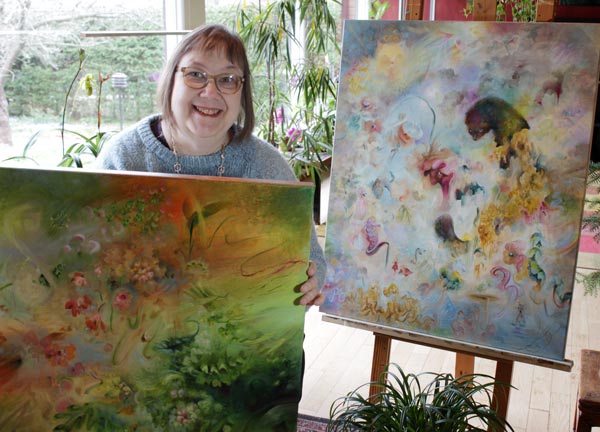
Starting a New Sketchbook with Botanical Art
This week, I share how I am starting a new sketchbook!
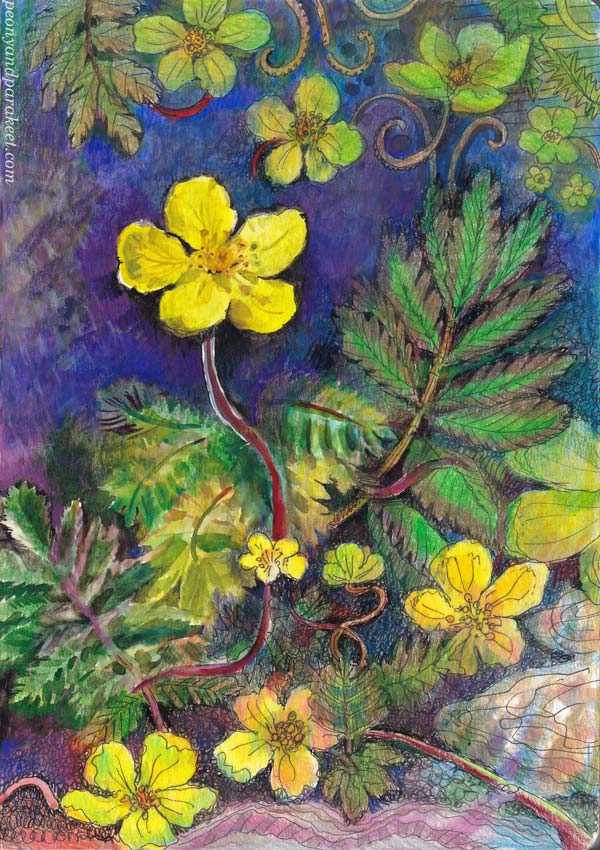
Eged’s silverweed (meriketohanhikki in Finnish)
Starting the Dingbats Pro Green Beetle Notebook
For a long time, I’ve been looking for a sketchbook that works well with both pens and watercolors. I’ve used Fabriano’s thick (200 gsm) Accademia drawing paper for individual drawings for years. But now that I’m gathering material for a new painting series, I really wanted to create my work in a book instead of keeping loose sheets in a folder. Flipping through a book’s pages just feels so much nicer than turning plastic sleeves in a binder.
I noticed that a Finnish stationery shop, Vihkokauppa, had added the Dingbats Pro Green Beetle Notebook to their range. The product description said that the maker spent a long time developing the paper to make it suitable for watercolors. I don’t live near the shop, so I took a chance and ordered it online.
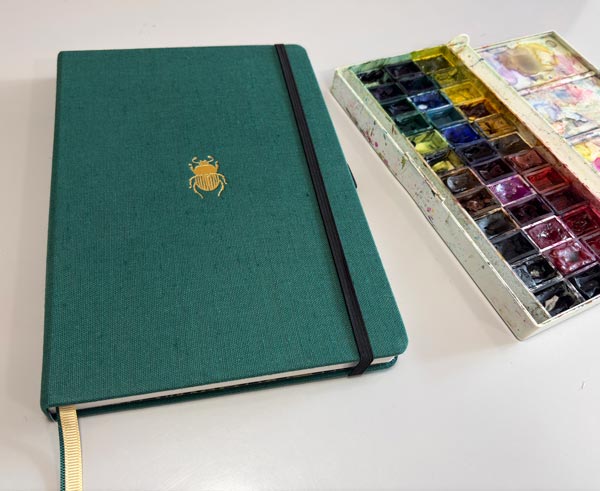
I was lucky. Based on the experience so far, the paper is truly great! It’s thin enough (160 gsm) so the notebook doesn’t feel bulky, but thick enough to hold water. The pages are wonderfully smooth and work great with fineliners and colored pencils. Because of its size (B5), it’s also a good fit for my new course, Drawing Soulfully, if you prefer to do your course drawings in a book.
Moving Away from Procrastination
I have a few topics I want to explore before starting my next series of big paintings. I have a short list, and I’ll share my ideas in future blog posts. These are mostly things I have wanted to explore more deeply for quite some time, but have procrastinated on for some reason. It’s time to stop that procrastination! Building the new course, Drawing Soulfully, has given me a lot of energy for that, and I hope that the course will inspire you too!
One of the topics on my list is plants. The exact species doesn’t matter, though of course I prefer to see the plant with my own eyes first. Plants have such interesting shapes and details that I want to add to my artistic repertoire. So now, when I was starting a new sketchbook, my first project was to pick a plant and draw it.
I took a few photos of a cute yellow-flowered plant during a little getaway in June, and later identified it at home. The silverweed made it as the very first entry in my new sketchbook!
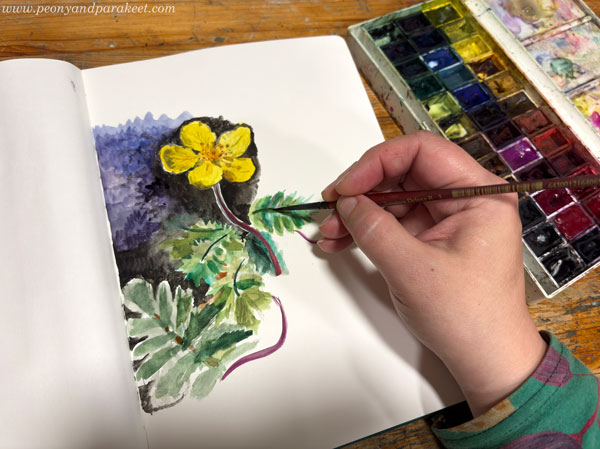
I started the drawing without any pencil sketching, going straight in with watercolors. For the main flower, I followed one of my photos quite closely, but after that, I let go and worked more freely.
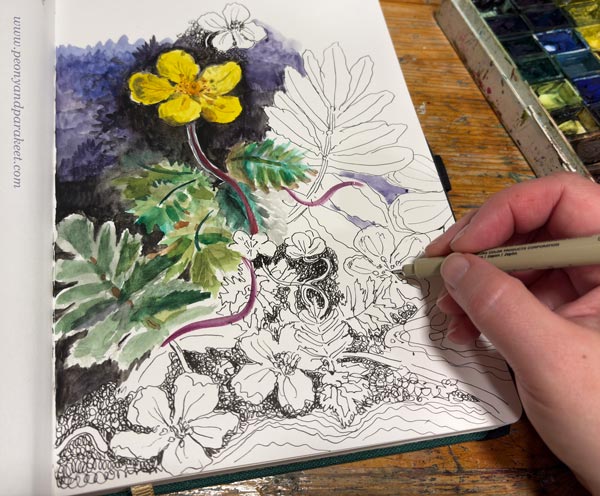
I think the soft feel of watercolors and the precision of fineliners go together so well. I just love drawing with thin pens.
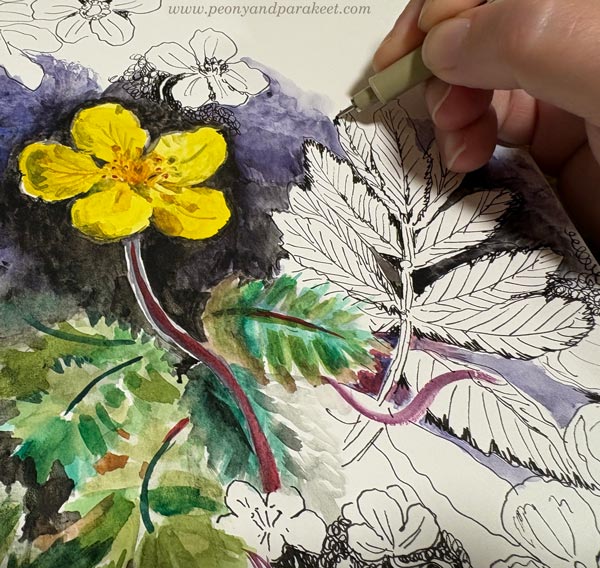
Using only a little water with thin brushes makes me feel like I am a decorative painter in the 18th or 19th century! I also made some notes about the plant on the opposite page.
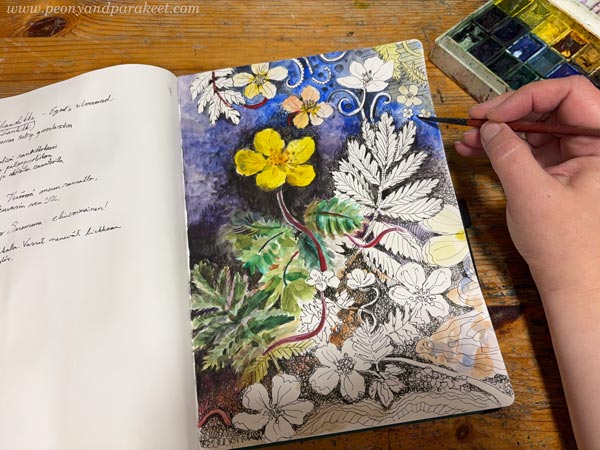
Having the black-and-white parts on the page didn’t bother me at all, so I actually thought about leaving the page like that—half black-and-white.
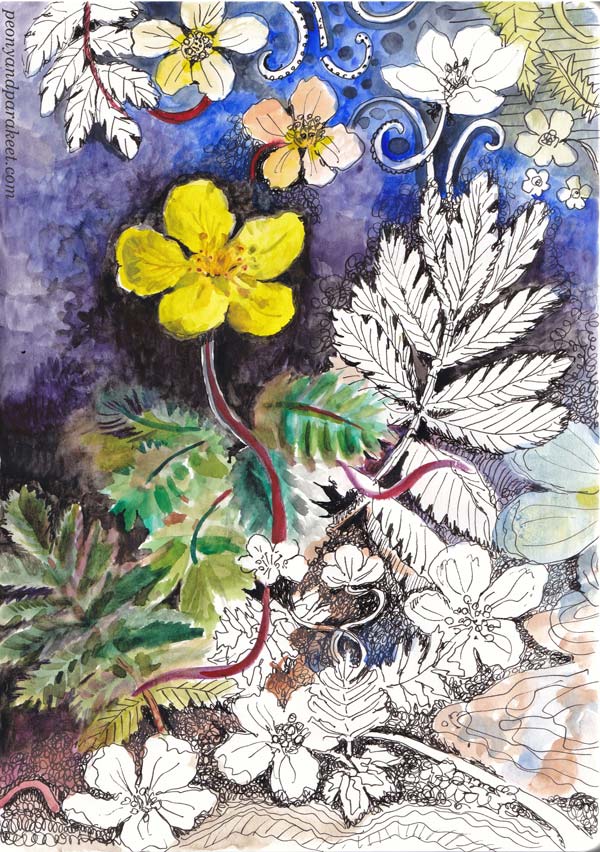
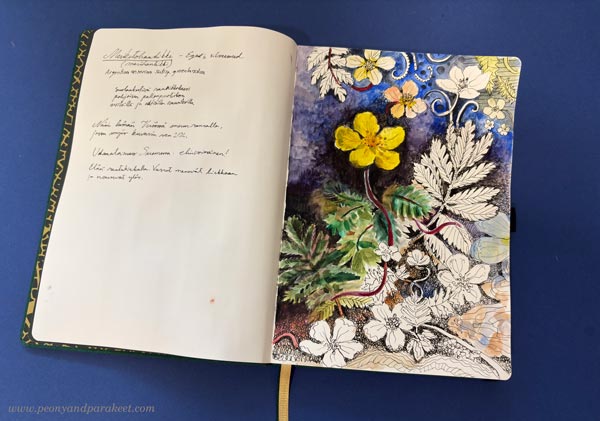
The next day, however, I decided to color in the black-and-white parts with colored pencils to bring more life and atmosphere into the drawing. It didn’t even take long, since the drawing itself and part of the coloring were already done.
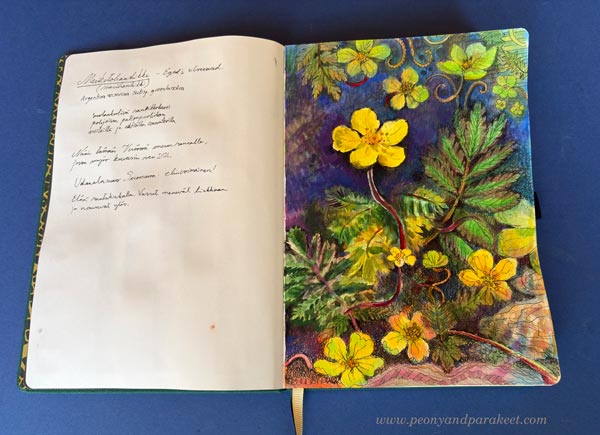
Starting a New Notebook – Watch the Video!
I recorded a few short videos while working. In the video below, you can see the notebook and how the first page came together. You’ll also see the watercolor swatch grid I made at the front of the book.
Even if the starting point is botanical, the finished drawing can be expressive rather than stiff. I hope all of this inspires you to draw more, and maybe you are starting a new sketchbook/art journal too!
For the Love of Drawing
Don’t forget to sign up for the new course Drawing Soulfully! In the short video below, I talk a bit more about the love for drawing and what the course is all about.
Drawing Soulfully – Sign Up Now!
In Drawing Soulfully, we work with and without photos but always with a creative approach.
Drawing Soulfully begins on August 25, 2026. >> Sign Up Now!
Layered Painting – The Many Details of Golden
Layers make a painting. My newest layered painting, Golden, is surprisingly a rebirth of an older piece of mine.
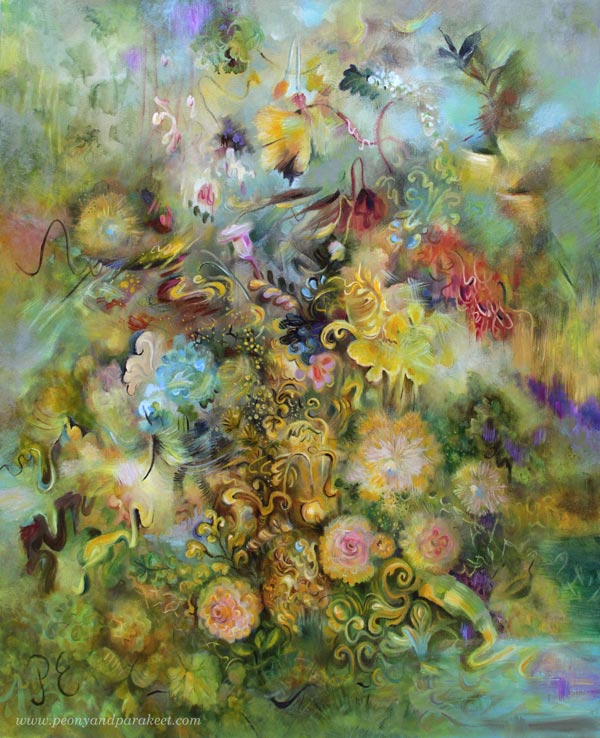
From Gossamer to Golden
The painting behind Golden was Gossamer.
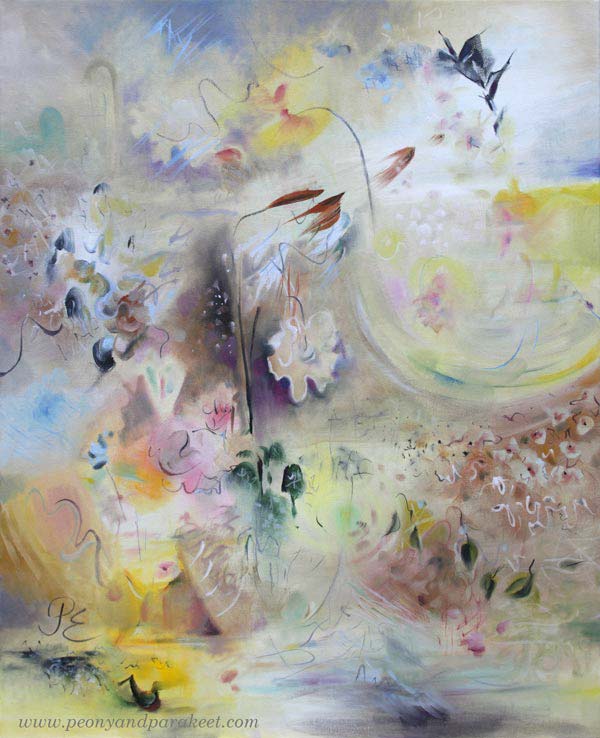
Gossamer started as a test. I wanted to see if I could finish a painting in one go and with a more minimalist, modern style. I thought it turned out pretty nice.
But after looking at Gossamer for a while – especially the top-right corner – ideas started flowing. A beautiful tulip bloomed in my front yard. I found myself missing a sold painting called Elixir. And I got hooked on the hit song Golden (specifically the version performed at the Oscars).
So, I made a promise to Gossamer: “Even though most of you will be covered up, you’re going to be reborn as something even better.”
I bet Gossamer had its doubts at this point!
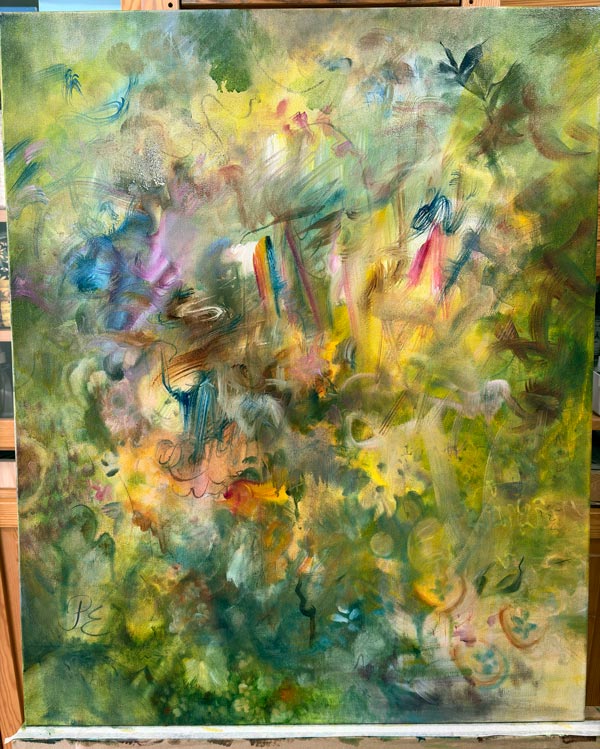
Layered Painting
Here’s a short video of one of the painting sessions in May.
It took almost three months, but layer by layer and detail by detail, Golden appeared.
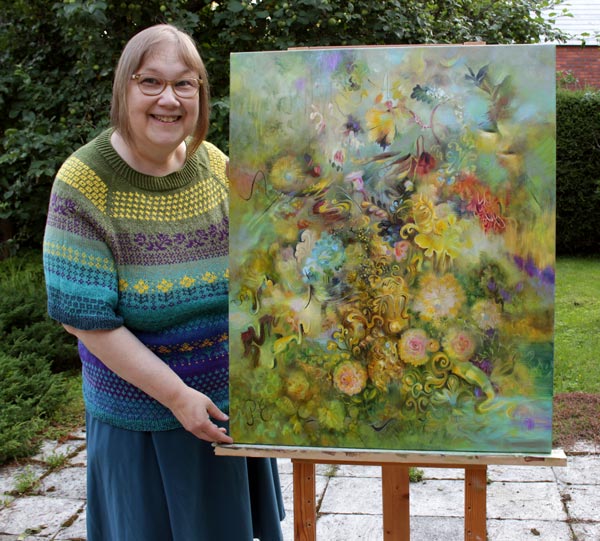
Here are some photos of the finished details.
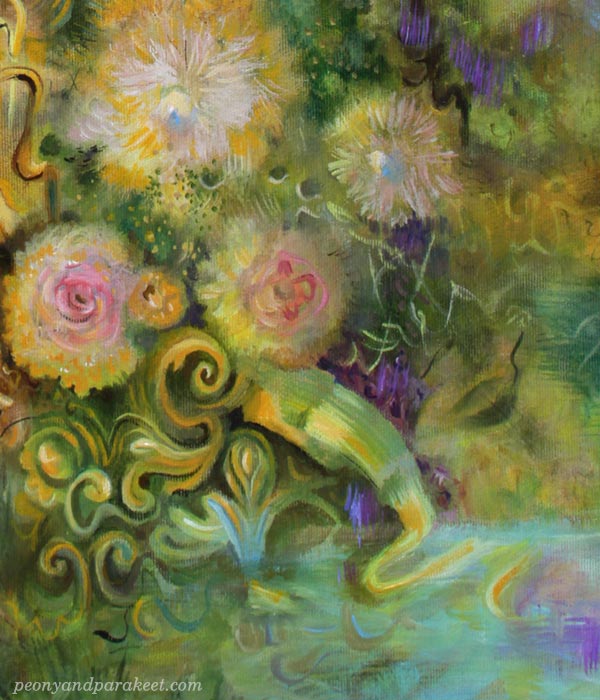
I like to use a lot of lines when I paint.
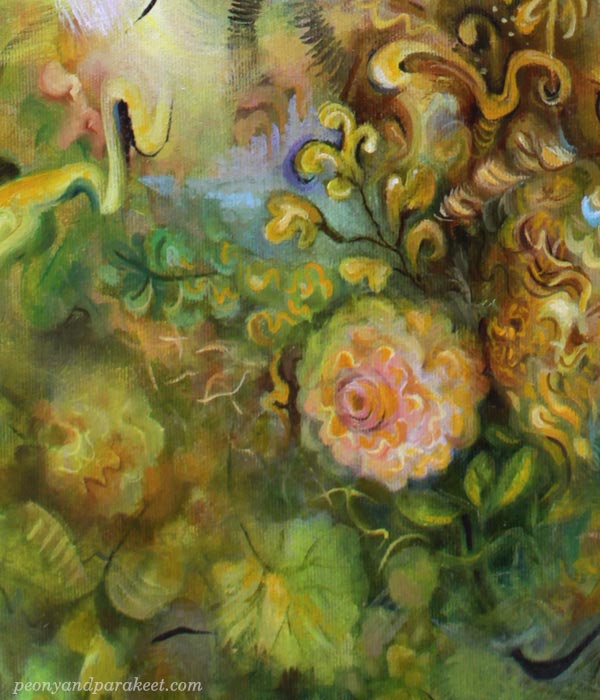
The secret of easy layering: Any blurry spot looks sharp when there are lines on top.
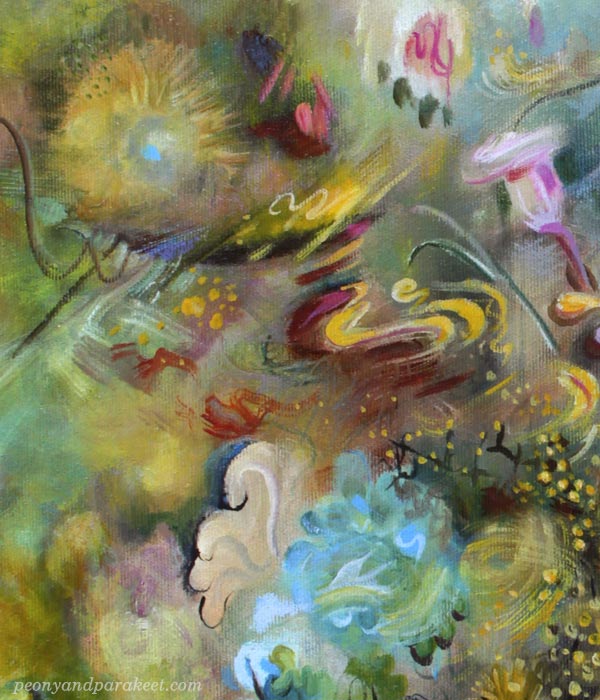
Drawing has improved my motoric skills so that I can easily paint all kinds of elegant shapes with a thin brush.
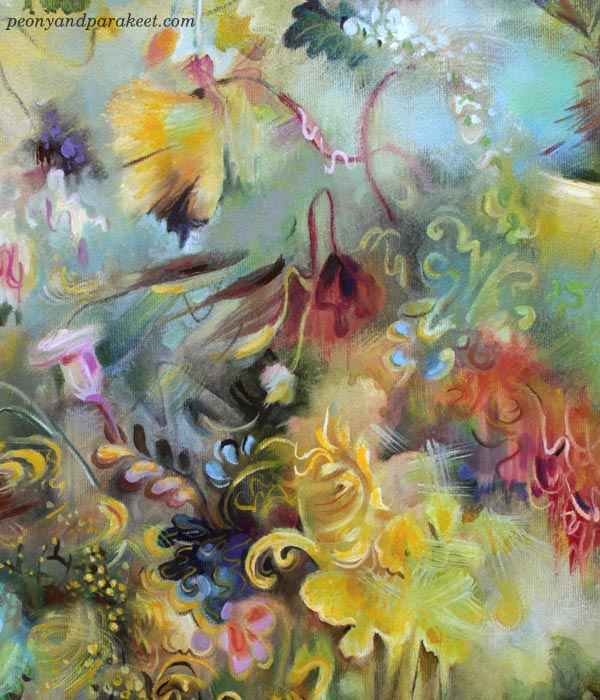
Here is a short video where you can see this layered painting even closer.
My long history of drawing influences my paintings, and Golden is no exception. I love a lively, soulful line, and all the different textures and tones you can create with it.
Drawing Soulfully – Sign Up Now!
Drawing Soulfully begins on August 25, but the early-bird sale is now on!
Get 20 EUR OFF! >> Sign Up Now!
The sale ends on July 26, 2026, at midnight PDT.
Ikigai – Making Intuitive Painting Feel Natural
This week, I show you my newest oil painting, ‘Ikigai,’ and talk about how intuitive painting can become logical, and how a logical painting can feel natural.
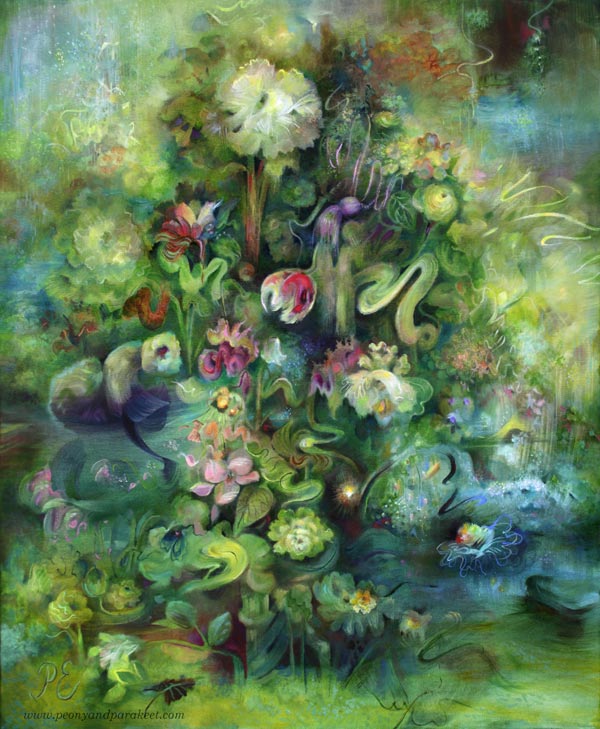
There are many extraordinary elements in this painting, but it still feels quite realistic and natural.
Find the Guiding Element
When you create intuitively, the first layers get all kinds of random details. After that, it is about:
- What to save
- What to tone down
- What to highlight
- What to hide
- What to add
In Ikigai, I looked for an element where the canvas had already come to life as a painting. When I found it, I protected that pulsating spot so that its spirit spread and a small world grew around it.
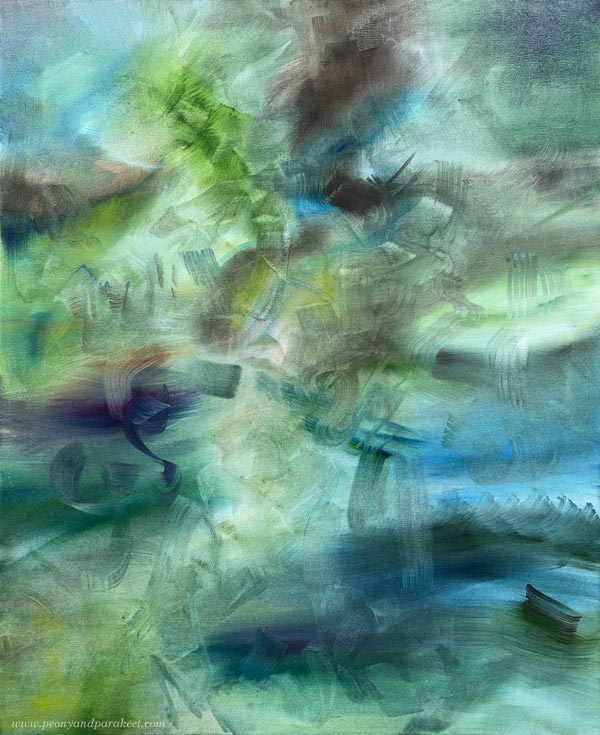
Can you already guess what element guided me through the whole painting? The picture above is the first layer, and the picture below shows the painting in progress.
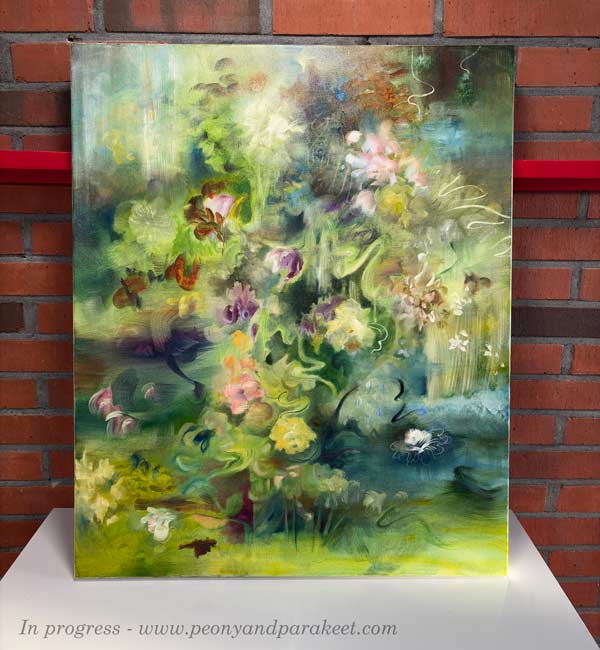
Intuition is like a whisper that can expand into a stronger sense of presence. That requires time and skills, but also logic.
From Writing a Course to Painting a Picture
Lately, I have been writing a script for a new course (some info). The more courses I make, the more I realize how important the script is. Having a script doesn’t mean I cannot choose my words freely when speaking to the camera. It also does not stop me from throwing myself fully into the drawing exercises while the camera is rolling.
Course videos include many different elements: theory, examples, explanations of the process, and reflections on artistic thinking. All of this needs a good rhythm. I need to know what I am saying and how freely I am speaking in different parts of the videos. My goal is to build a logical educational structure behind the course, without forgetting the human side of making art. I want my courses to be inspiring, entertaining, and encouraging, but also educational, so that you will move forward in your art-making.
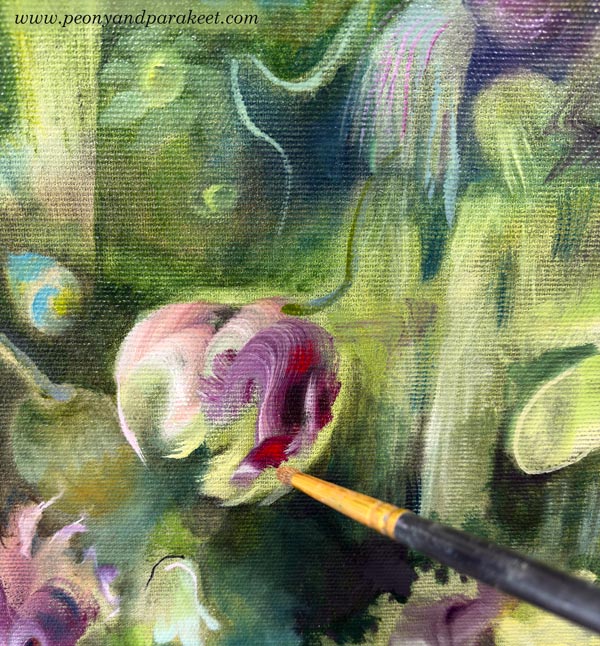
Painting is very much like making videos. Even if you didn’t sketch beforehand, you still need structures and ways to connect single elements into a whole. You need both technical and expressive skills. It’s also beneficial to be able to see what is essential and to understand the role of logic.
The Logic Makes the Magic
When a painting is logical, it feels natural. Logic in painting does not mean that the picture has to be realistic. Instead, it means that there is interaction between the elements. For example, a weak line can humbly take a curve to go around a strong dot. Or a bright line can send small rays of light over nearby shapes, changing their color. The interaction ties everything together.
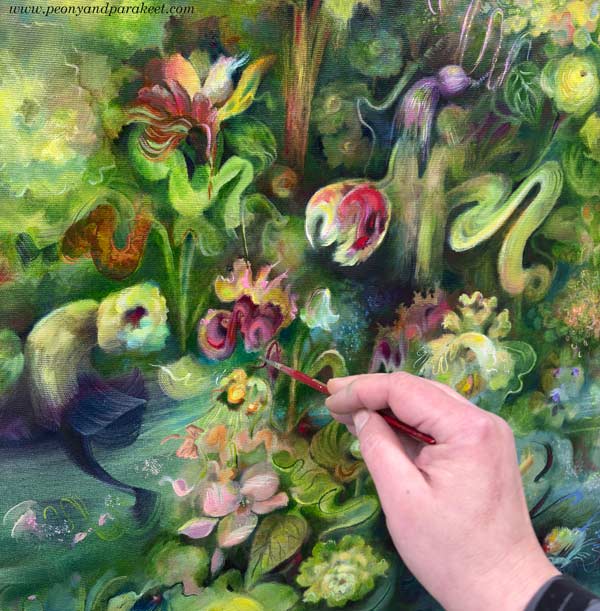
Even a static image can feel alive. At its best, you can look at a painting like an event. It’s fascinating how interaction makes the unreal elements feel real. Being able to express ourselves freely on paper and canvas is one of the best things in life.
Details of Ikigai
Here’s the guiding element in my painting. I have made some additions to the original strokes, but the spirit is the same.
I have noticed that in my paintings, the guiding element is rarely a focal point. Here’s the focal point – the tulip and her two red friends.
Ikigai – a reason to live, a reason to wake up in the morning. According to this Japanese philosophy, we should orient ourselves toward the point where our passion, mission, calling, and profession meet. I feel like ikigai is condensed into the exact moment where night and morning meet.
In the morning, deep reflection is interrupted by the call to action – get things going! And we get up despite all our responsibilities, but also because of them.
I love this kind of contradiction and complexity of life, and I try to bring it out as naturally as possible in my paintings.
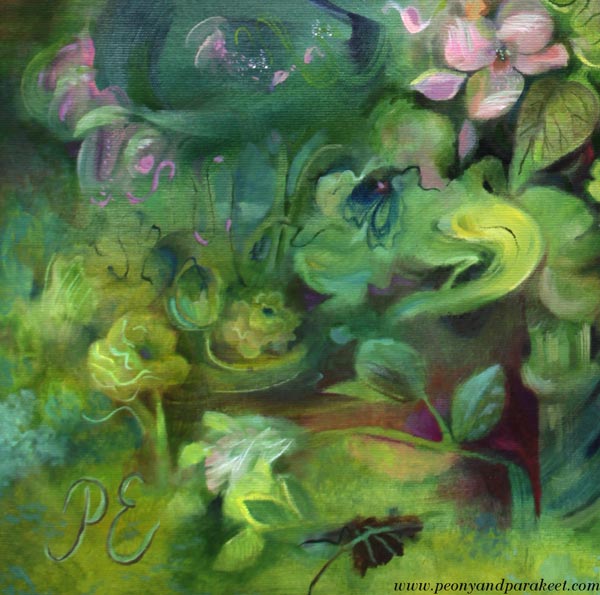
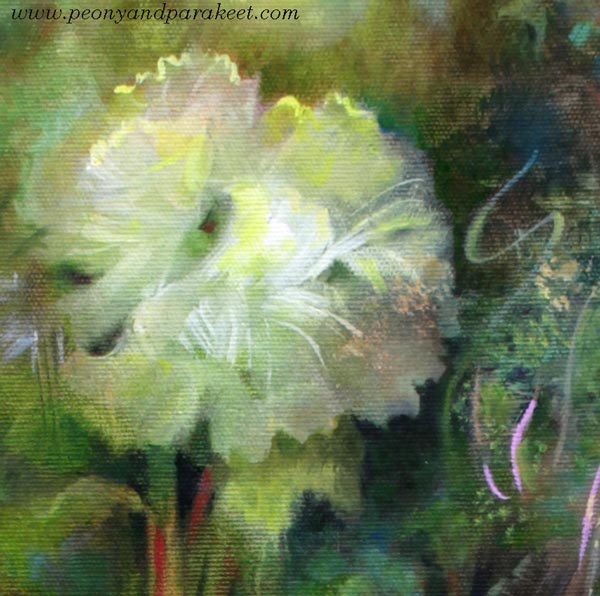
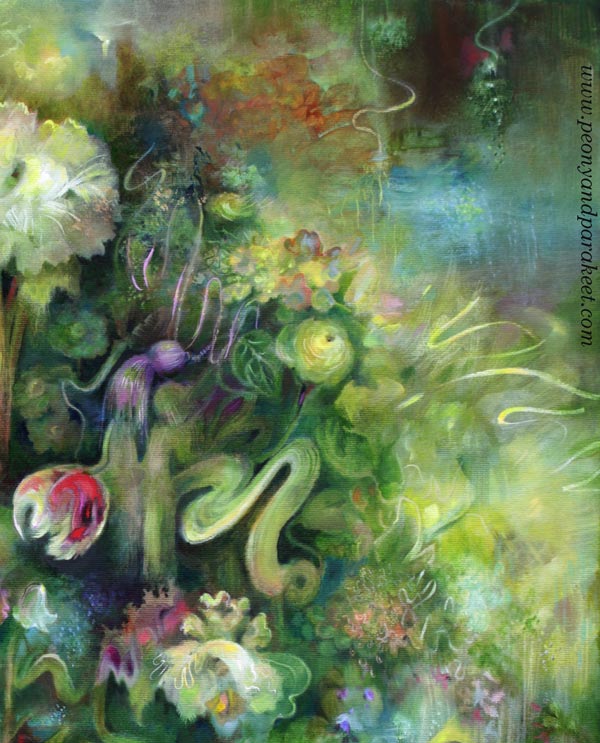
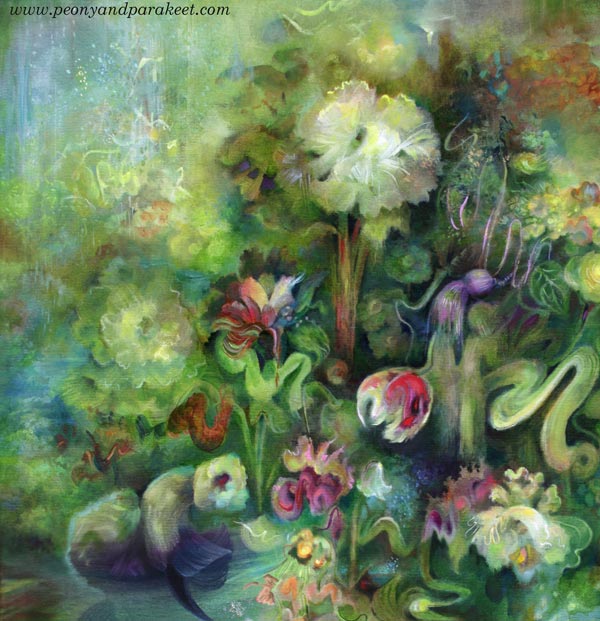
The Four Principles of Ikigai and Making Art
Passion – What you love – Intuitively found
Calling – Why you exist, what’s your inner purpose – Naturally rising
Mission – What you do in practice – Needs logic
Profession – Where you are good at – Skill-oriented
The sweetspot is where all are met and aligned.
What do you think?
Can Playful Art Be Serious?
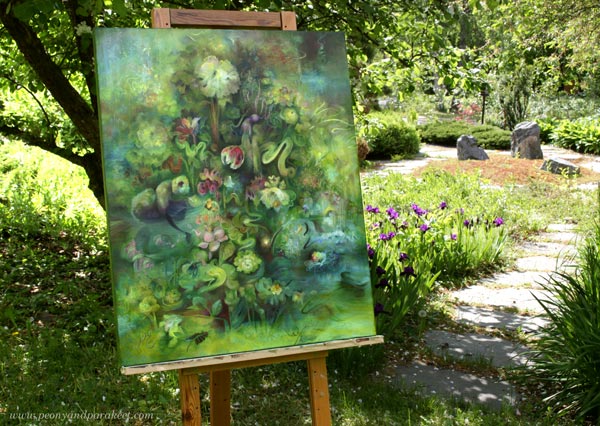
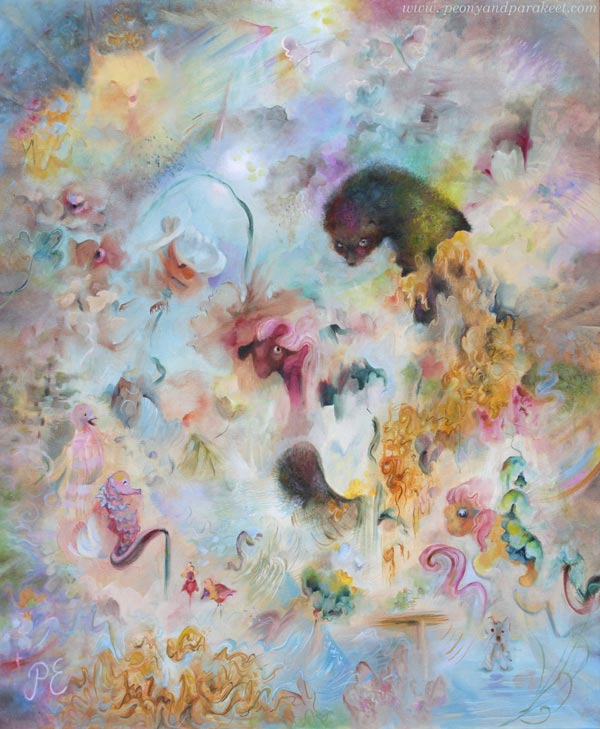
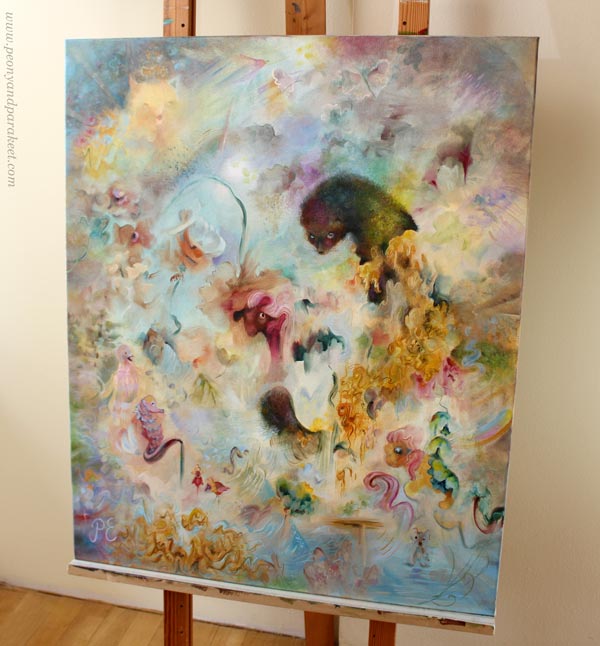
This week, I want to talk about my newly finished painting titled Fauna. This is one of my most peculiar pieces, filled with strange ideas. With this, I want to challenge us to ponder the question: Can playful art be serious?
Ideas Have a Mental Age
This painting combines many ideas. I tend to come up with all sorts of ideas quite easily, and I usually try to categorize them: some make it here to the blog, some become sketches in my planner, and others turn into courses. Only the most mature ones are usually included in the paintings.
But let’s think about this word: mature.
Ideas have a mental age. Some ideas are like those of a five-year-old, while others contain ancient wisdom. For a long time, I have tried to ensure that my best ideas are “sensible adults”.
Fauna’s Ideas
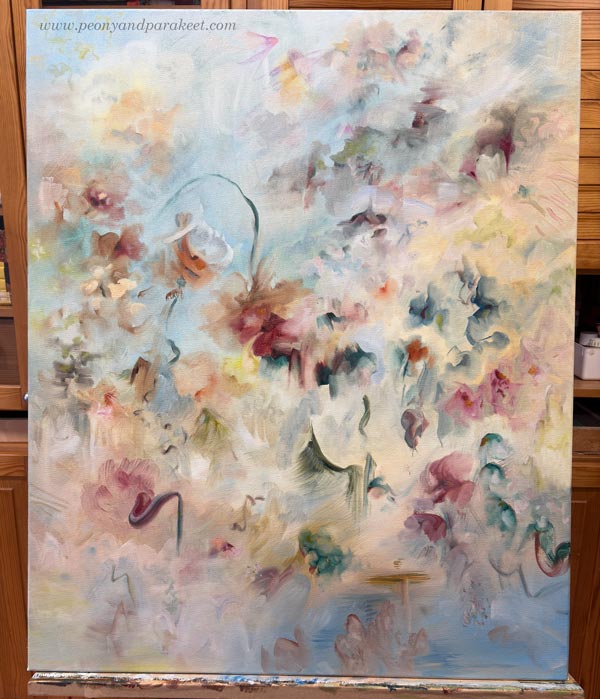
Fauna started from an old idea: the Baroque style and historical ceiling murals. So I thought that the painting could feature flowers and have plenty of light blue. Here’s how it started:
But then I heard my inner child whisper that I should include an animal: “Fur is so wonderful to paint. Let’s include something like a ferret!” The adult me wondered, “Who would want a painting featuring a weasel?” But you know, some ideas are like tiny butterflies that appear and vanish in an instant, while others are like moose that take over your entire mind. And this was a “moose idea.” It wouldn’t leave me alone, so fine —let there be a weasel of some kind!
But what else could be included?
Words help when I am brainstorming. I read through various word lists and wait for the moment my intuition says “Bingo!” That’s how I found the word “hunaja” – honey. I thought about the intricate swirls of the Baroque style and the way honey drips, and I boldly added them to the painting.
Here I am painting the fur. I use not only short strokes, but also paint small patches with different tones. Layering is the key!
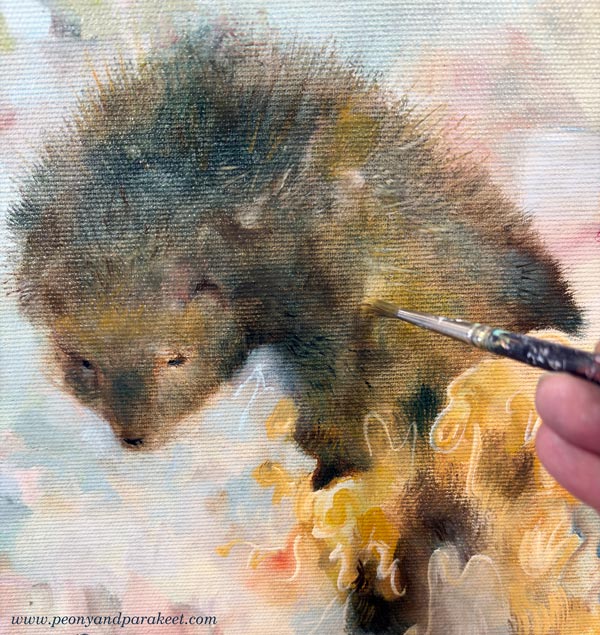
In the final version, the fur is softer and shorter, and lit by a rainbow. It took some time to decide whether the fur should be spiky or softer.
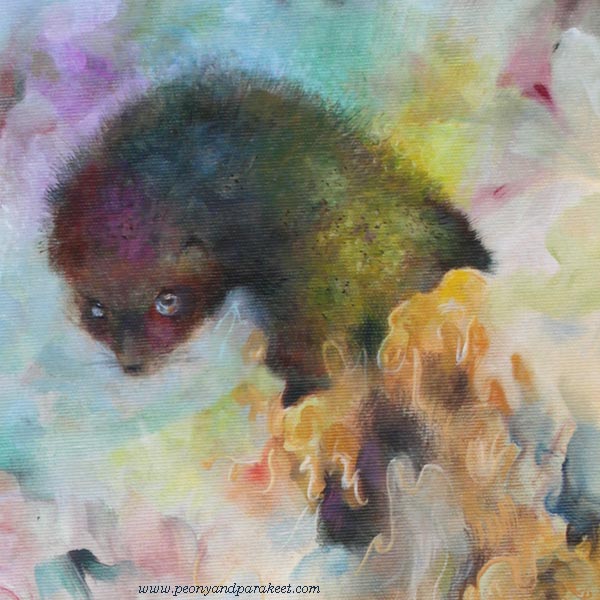
With the idea of painting honey, I found myself on a “mad path” where I stopped categorizing my ideas and challenged myself instead: could I create a painting that looks like a floral piece from a distance, but reveals a more playful character upon closer inspection? Could the animal theme lead toward animal figures—even toys? I wanted to achieve a purity of style that isn’t tied to a single era, but rather to my own way of dealing with shapes and lines.
Here you can see the beginning and the end side by side.
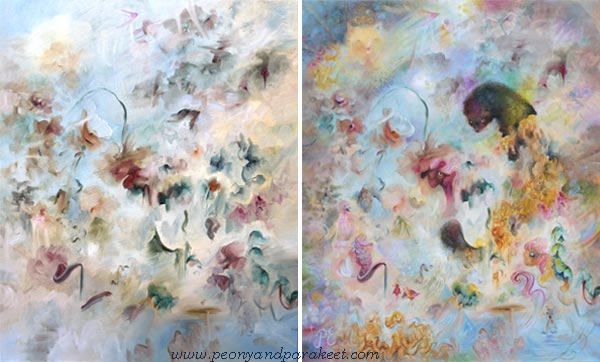
Playful Art – Drawing Animals
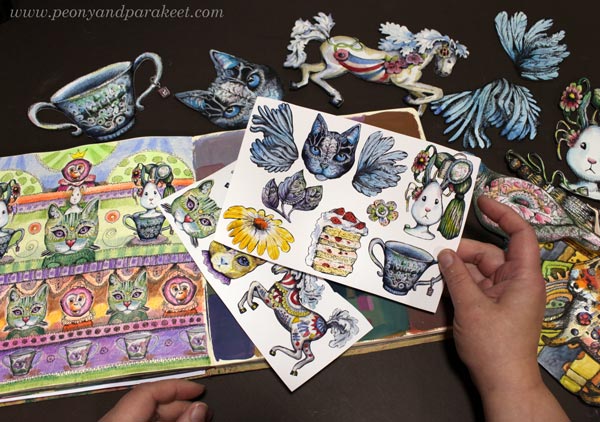
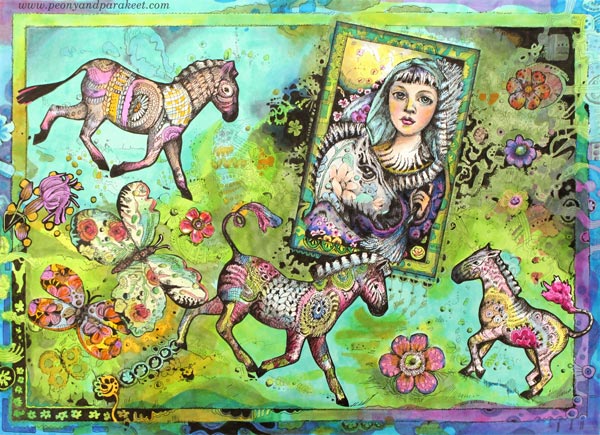
I have always loved animals and have drawn them a lot. Drawing with a pen is much easier than drawing with a brush.
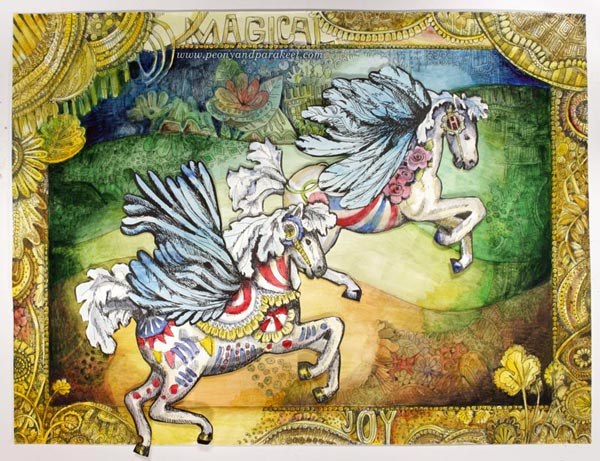
Animal Inkdom and Magical Inkdom have been highlights of my course creation because, while making them, I decided to believe that everyone wants to draw animals. That mindset brought a lot of confidence and joy to the process, which also translates into the atmosphere of the courses.
I have had so much fun with all the animals drawn in those courses. My father used to draw with quite a similar technique, so I have continued on his path here.

The Playfulness is in the Details
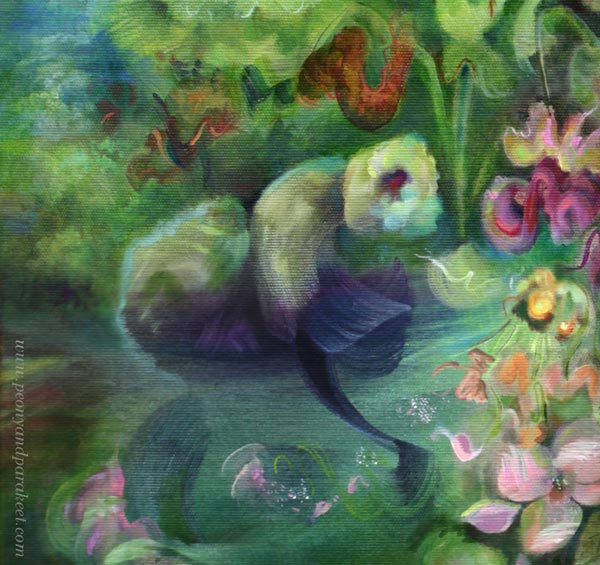
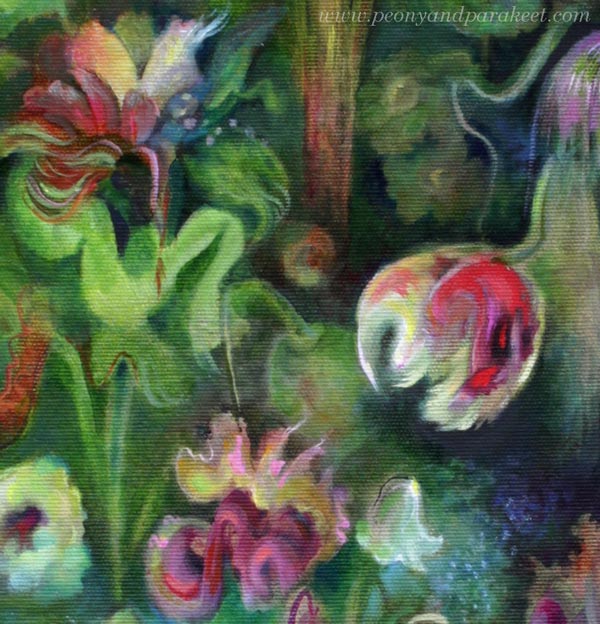
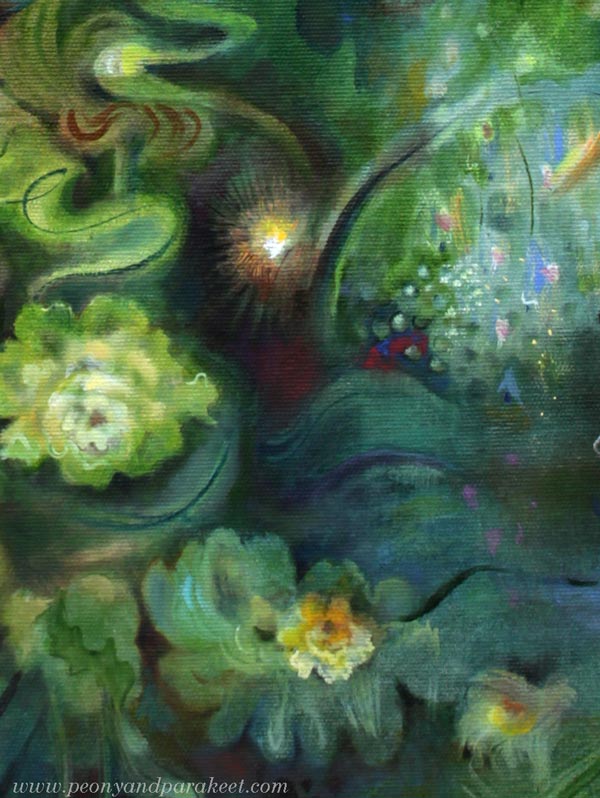
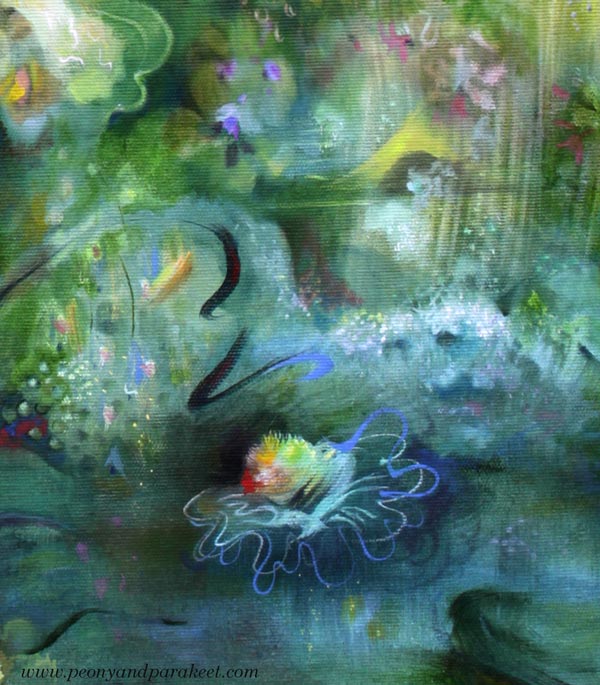
Fauna is full of playful details. Many of them are quite subtle, barely noticeable. Here are some detail pics.
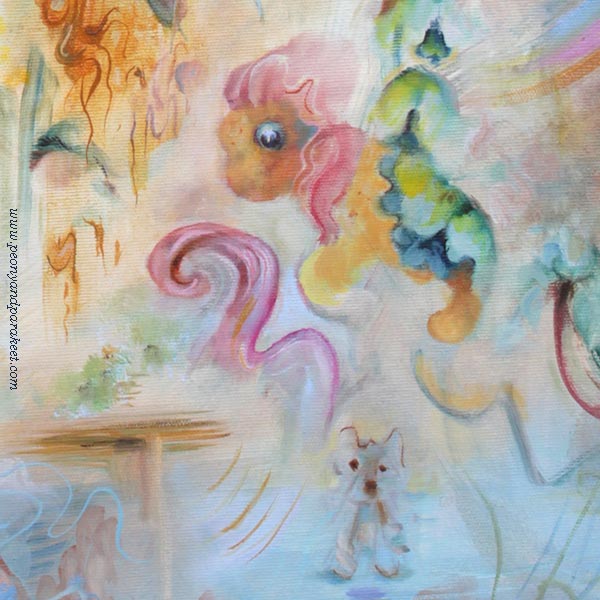
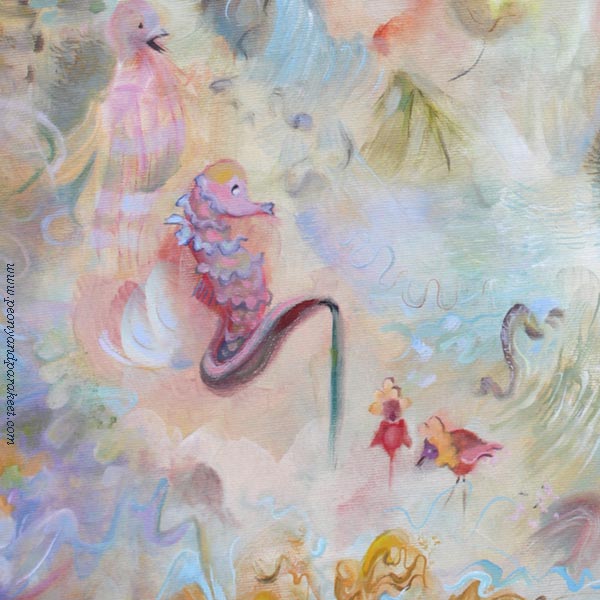
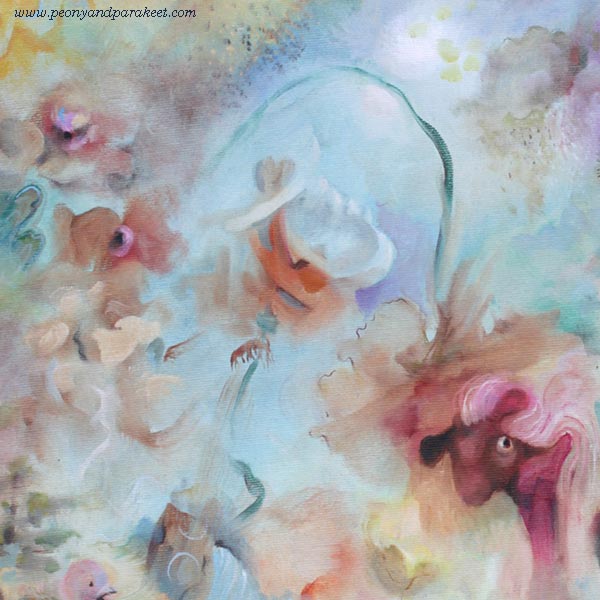
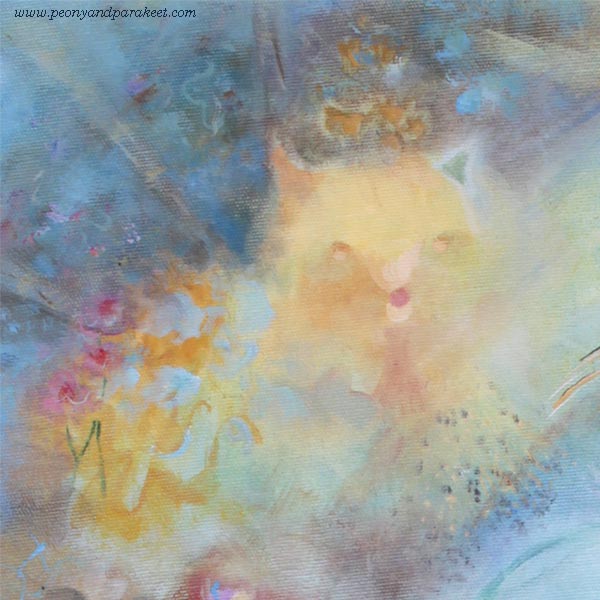
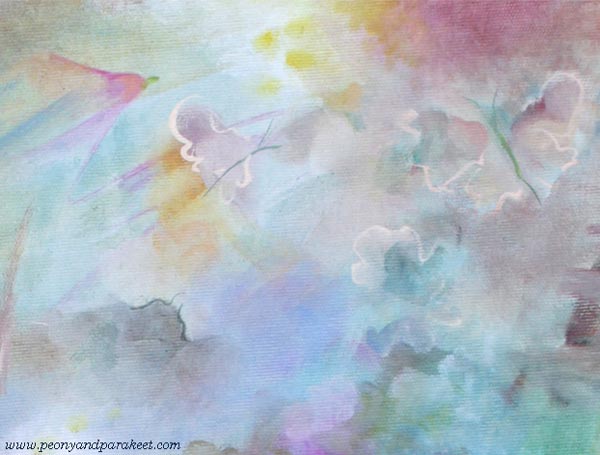
I see myself in this painting—all the versions of me at different ages, with ideas of all ages.
Even if Fauna was a challenge to create, it was also fun. I think I will create more of this kind of playful art.
Age of Ideas – Just Playing or Only Focusing on the Serious Side
This painting process made me reflect on how people who start making art often fixate on the “age” of their ideas. Some decide they are just having fun and playing. Others believe that skills—and thus art—can only be born through realism. But as artistic thinking and skills develop, there is an opportunity to combine the playful with the more serious. It is possible to be a child, an adult, and an elder all at once. Art doesn’t need to be narrowed down, because creating is a search not just for oneself, but for a broader understanding of humanity.
Fauna is a bit different from Halo – the painting that I showed last week.
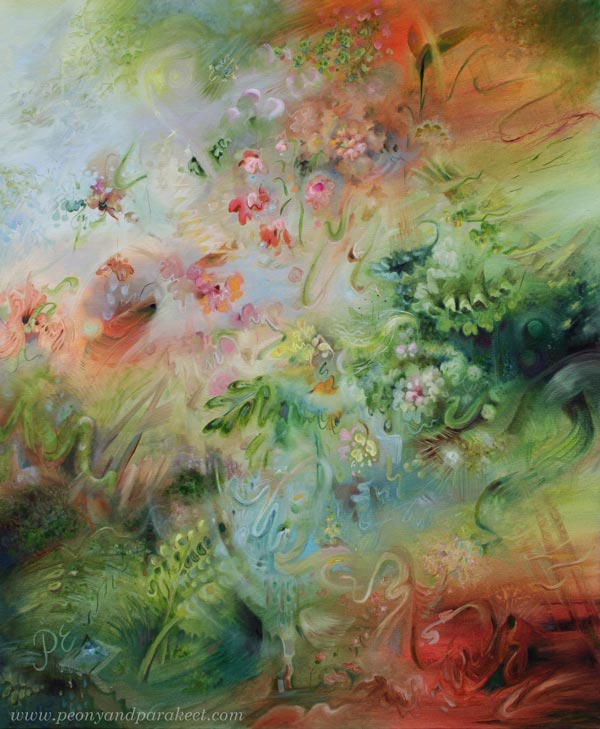
See the blog post about creating this painting
See more pics and a video at Taiko Finnish Online Art Store
Which one do you like more – Halo or Fauna?